Saturday, February 11, 2012

Palmiers and Principles

“I think that in no country in the civilized world is less attention paid to philosophy than in the United States.” – Alexis de Tocqueville [Democracy in America]

In Adam Gopnik’s article, “The Caging of America”, in the January 30 edition of The New Yorker, Gopnik searches to understand why America locks so many people away in prison.  He cites a book published last fall by William J. Stuntz, a professor at Harvard Law School, titled “The Collapse of American Criminal Justice.”  As a Harvard law professor, Stuntz has standing to comment on the relationship between our laws and our criminal justice system, but he surprises us by showing no fear in assailing the very building blocks of Amercian law, the Constitution and the Bill of Rights.  Stuntz holds that “our Bill of Rights is a terrible document with which to start a justice system.”

Hearing that announcement, most Americans would be happy to take issue with Stuntz over a beer at Pfaff's pub.  But listen to his reasoning and see if perhaps you might consider agreeing with him.

“In a society where Constitution worship is still a requisite on the right and left alike, Stuntz startlingly suggests that the Bill of Rights is a terrible document with which to start a justice system – much inferior to the exactly contemporary French Declaration of the Rights of Man, which Jefferson, he points out, may have helped shape while his protégé Madison was writing ours.

The trouble with the Bill of Rights, he argues, is that it emphasizes process and procedure rather than principles.  The Declaration of the Rights of Man says, Be just!  The Bill of Rights says, Be fair!  Instead of announcing general principles – no one should be accused of something that wasn’t a crime when he did it; cruel punishments are always wrong; the goal of justice is, above all, that justice be done – it talks procedurally.  You can’t search someone without a reason; you can’t accuse him without allowing him to see the evidence; and so on.  This emphasis, Stuntz thinks, has led to the current [prison] mess, where accused criminals get laboriously articulated protection against procedural errors and no protection at all against outrageous and obvious violations of simple justice.  You can get off if the cops looked in the wrong car with the wrong warrant when they found your joint, but you have no recourse if owning the joint gets you locked up for life.  You may be spared the death penalty if you can show a problem with your appointed defender, but it is much harder if there is merely enormous accumulated evidence that you weren’t guilty in the first place and the jury got it wrong.  Even clauses that Americans are taught to revere are, Stuntz maintains, are unworthy of reverence: the ban on “cruel and unusual punishment” was designed to protect cruel punishments – flogging and branding – that were not at that time unusual.” Adam Gopnik, The New Yorker.

Tuesday, May 3, 2011

Quit Pushing


QUIT PUSHING


Alright already, I’m up, I’m up.  Christ, it stinks in here.  Can somebody please get this dog out of my room.  I mean really, this is where I sleep.

“Farfel has four legs too so I’m sure the horses will love having him sleep with them.”

Wrong!  I hate this mutt.  He pissed on my leg, shit in my hay and he barks at anything that moves.  I can barely turn around in here and they have to stick precious Farfel in here too.  Some palace this is.  They should sleep in here and see what a palace it is.

Yeah, open the freakin’ doors and get some fresh air in here.


Race day? 

Whoa, wait a minute, Saturday, Saturday is race day.  Today is Sunday pal, I trot a few laps and back to the paddock for lunch with that cute filly with the long face. 

Getting ready for what Derby?  Derby, Schmerby, I never agreed to this.  They said I race on Saturday so I don’t really have to…what, shoes again?  What’s wrong with these?  They feel fine.  

Hey, HEY, easy with the pliers fella.  

How come fucking Farfel doesn’t have to wear shoes? 

Fine, alright, I’m coming.  I know, I know, the saddle, I'm not an idiot..
Easy, wait a minute, WAIT A MINUTE, will you hold on for one second, I told you the third hole on the strap is the one, the fourth one is too TIGHT. 
Jesus, I can’t breathe.  How do you people expect me to race when I can’t breathe.  

Go ahead, walk behind me, just one clean shot - taste my hoof.  

Keep laughing Farfel.   


Hmm, the track's a tad muddy.  I think we should go back, I can't run in this.  Hey, are you listening?  I’ve told you a hundred times I don’t like running in the…

…hey Runamuck, they got you running in this slop too, huh.  What’s the good word?


    Same shit, different track.  


I know, you believe this mud.  This whole place is a dump, the food sucks, tiny rooms.  Do they make you sleep with dogs?


Hey Runamuck, what ever happened to that fella from Kentucky?


    Oh, you mean Ima Walkin’, with the brown and white face.  Funny bastard. 


Remember when he farted in the guy’s face at the loading gate.  Almost knocked him over.  Boy he was funny…ran like a cripple, but funny as hell.


    They timed him with a calendar. 


Buwahahaha.  


    I heard he retired last year.  He’s pulling some wagon in New York with all the other losers.  

    He’s a walkin’ alright, walkin’ twelve hour days for some jackass in a top hat.  And get this, he has to wear a 

    diaper.  Poor bastard.  Remember Mount Up, he was a fast sucker.  Now, he did it right.  


Sure, you win a bunch of races and you retire to Florida.  The guy gets up at noon, roams around all day yuckin’ it up with his buddies, eats whatever the hell he wants and get this, they bring in girls three, four times a week!  

Me?  Another one, two more years then I’m done with this crap.  

Yep, I figure another couple of wins and it’s Florida here I come.


Ah, yes, gate #6, my lucky number.  Alright, who do we have today.  What a bunch of losers.  

Is this the best you people can do?  Dog food on four legs.  

Hey Runamuck, look at this beauty – blinkers? C’mon ya big baby, afraid to see me passing your ass?  I’m gonna beat you like a rented mule. 


    What’d ya say pal?  You’re gonna beat who like a what?  Furlong where?  Yeah, I got your furlong right here! 


Yeah, yeah, meet me in the winner's circle Elmer.


Look at this one, another bag a glue in #5.  

C’mon people, some competition please!  

Hmm, he’s little bigger than I thought.  
OK, yep, definitely bigger than I thought.  
Wow, really big.  
Jesus, where’d this guy come from. 

Runamuck, you know this guy? 
Anybody seen this guy before.  
This must be a mistake.  

Hey, I thought this was just for three year olds?  

Well, I’d check this guy’s papers.  Seriously.  

Will you just wait a minute and listen.  There’s no way he’s three, look at the size of him.  

First you make me work on my day off and now this. 

OK, that’s it, I’m done; this guy’s cheating so I’m not racing.  This whole thing is bogus and I’m outta…

…alright put the whip down.  
Just put it down and let’s talk about this. 

Yes, yes, OK, ALRIGHT, I was just kidding, can’t you take a joke.  

Yes, right, I know, I’m in #6, next to Godzilla.  

Look #12 is open, let’s go in there, much more room for me to...

…why not?  

Who’s being fussy?   

What’s the difference, #6, #12.  

If anyone’s being fussy it’s…

…alright I’m going.  

Quit pushing.


Thursday, April 14, 2011

Head Lights

There is a shift occurring in the way our children are being educated today.  Over the past several years, more and more online courses are being offered to high school and college students.  In fact, there are school districts around the country who are working hard to make online courses a mandatory component of their high school curriculums.

Since their inception, online courses have seemed like an efficient tool in educating a greater number of students and the arguments for their increased use in middle school, high school and college sound worthwhile.  Computers are part of our daily lives and students should learn to use them proficiently.  The internet, as a tool for research and knowledge has become de rigueur.  Administrators who support the growth of online classes add that they allow for wider educational opportunities to a greater number of students.  For example, the Early English Literature class typically chosen by only a handful of students would likely be cancelled due to lack of interest.  Now, that course can be offered online, providing those few students with educational enrichment they would otherwise not have been exposed to.  Everyone seems ready to add online education to the remarkable list of benefits drawn from perhaps the greatest invention of modern times – the internet.  Not so fast. 

I suspect the real motivation behind this shift to online education is money.  And that blade cuts in two directions - saving school boards and colleges money on teacher salaries and classroom space while still allowing them to collect ever higher taxes and tuition from us parents.  Can you blame them?  In this time of financial uncertainty and mounting deficits from statehouses to our houses, shouldn’t a cost effective way to educate our youth be celebrated?  The answer depends on how you define “educate.”

In 1978 as a college sophomore studying marketing and management, readying myself for what I hoped would be a high paying and successful career in business, I had very little interest or use for literature.  There was compulsory reading -  the Wall Street Journal for school and the New York Daily news for Yankee scores.  Beyond those, I couldn’t tell you if I had ever read a novel on my own outside of a high school classroom.

The next year everything changed.  That’s the year I met Dr. John Daniels and through him, Herman Melville, Henry David Thoreau and Nathaniel Hawthorne.  Dr. Daniels didn’t look like an English professor.  No beard, no tweed coat with suede elbow patches.  He had withering gray hair, a long face of the same color and a bulbous pink nose.  His ever present pipe jutted out of his jaw silently accepting responsibility for the brownish yellow nuggets that passed for teeth.  But when the old man read passages from Melville’s “Billy Budd”, he smiled an inviting smile and the wretched nuggets became invisible.  All I could see on his face was the excitement of a kid on Christmas morning showing his dad how cool his new toy was and begging him to try it too.  And I did try it and I loved it.  The debates over language, the use of words, phrases and their meanings, not a single meaning but many, open to the reader’s interpretation, the development of rich characters and a story by a creative mind that can captivate a reader, the classroom was a thicket of ideas and Professor Daniels the machete creating light.  I saw things I didn’t see before thanks to this ancient hardscrabble English professor.  Dr. Daniels and his classroom forced me to ask myself questions about my future.  I seriously considered a career change to professor of literature.  In the end I didn’t change, but I was never the same.

Suddenly every class I attended seemed different.  Marketing, advertising, philosophy, they all became a thrilling game I couldn’t wait to play in.  Professors and students, new ideas and viewpoints, questions with no answers, many answers.  The realization came that finding the answer isn’t always what education is about.  The goal of education is the exposure to and engagement of ideas and questions that expand our minds, make us think differently and ultimately make us better and more curious human beings.  A lucky few are disciplined and inquisitive enough to educate themselves through reading - Abraham Lincoln comes to mind.  But for most of us, whether in high school or college, the classroom and its confluence of student, teacher and subject shouldn’t be minimized.   

Asking our high school students to sit in front of already overused computers following a silent, static online curriculum, not to mention abstaining from the temptation to plagiarize from thousands of websites in an attempt to provide a quality education misses the most valuable element of education.  It may save some money and allow a few students read Early English Literature on a brightly lit screen, but that’s no education.  

Wednesday, March 30, 2011

A Place That's Always Safe and Warm

A few days ago, the son of two very dear friends returned home from a tour of duty as an Army nurse stationed in Afganistan. His arrival home, complete with "Welcome Home Captain Davis" signs and tearful hugs from his wife and family was something I have seen on the news many times but never experienced through close friends. When I saw the photo of the soldier hugging his young wife at the airport, a song immediately began playing in my head, Bob Dylan's "Shelter from the Storm."

It wasn't long before I started putting this homecoming together with Dylan's song. But the song is four and a half minutes long and a simple idea became a bigger production.  And as so often happens in life, things that seem impossible suddenly and inexplicably fall into place; each image plucked out of the internet universe by its destined verse.  When it was done I thought that maybe it was a little overdone and indulgent.  Then I thought about where Captain Davis was and what he was doing for the better part of two years and I thought, maybe not.


Saturday, February 12, 2011

Big Bang

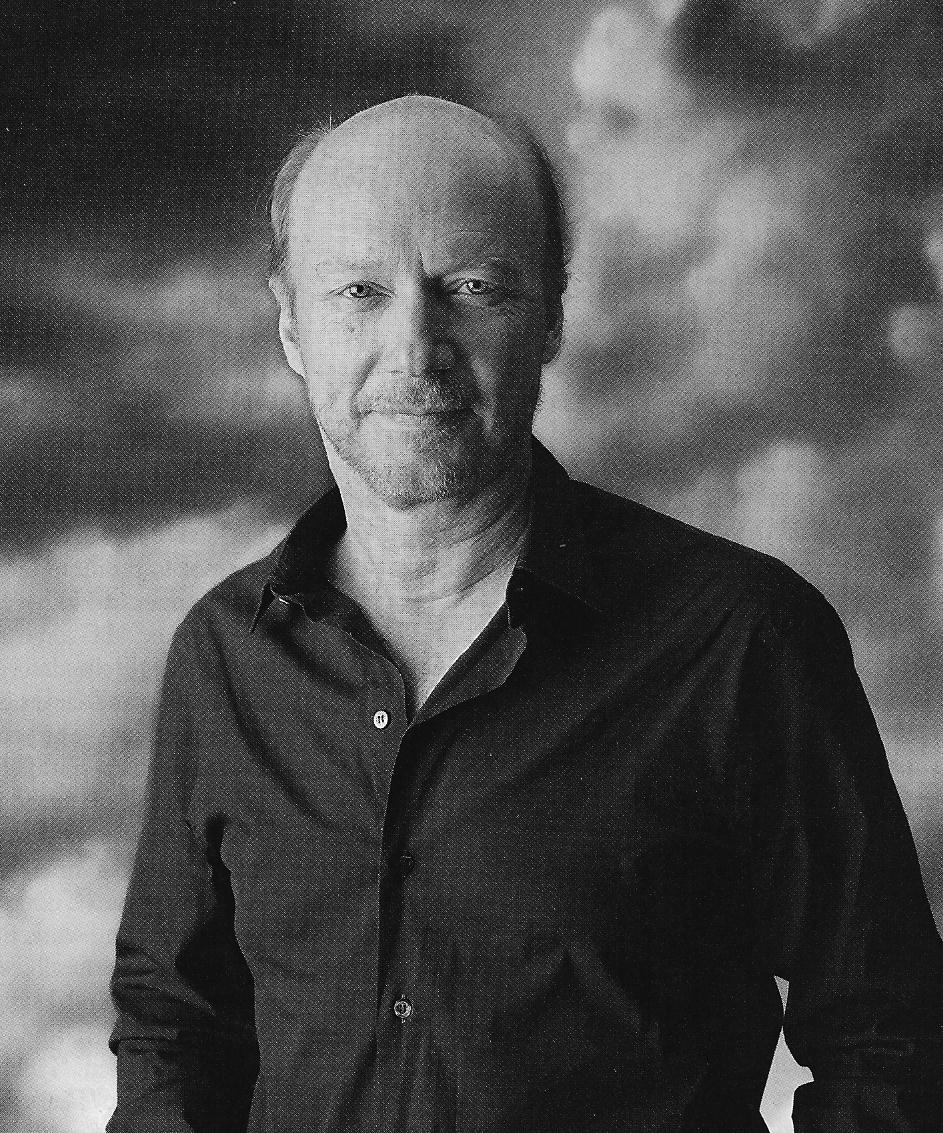
In 2009, Paul Haggis, the Hollywood screenwriter with credits including such acclaimed films as “Crash” and “Million Dollar Baby” and a devout follower of the Church of Scientology for thirty four years suddenly left the Church.

After reading his story in The New Yorker this week titled “The Apostate”, I realized there could have been many reasons for Haggis to quit the Church.  First, achievement and growth as a Scientologist is directly tied to study or “auditing” which according to the article’s author Lawrence Wright, can cost hundreds of thousands of dollars.  Next were the alleged claims of forced child labor in Scientology’s “Sea Org” and the claims of physical abuse from some members.  Then there was the practice of directing its members to “disconnect” from family and loved ones who were considered by the church to be P.T.S. or S.P. (Potential Trouble Sources or Suppressive Persons) as well as the use of polygraph tests on aspiring Scientologists. 
Finally, if those weren’t enough, there was the unauthorized publication of the Church’s sacred scriptures written by the creator of Church and the author of its foundational book “Dianetics”, L. Ron Hubbard.  This one convinced me that Scientology was nothing more than a lunatic cult.

In 1985, the Los Angles Times printed the Church’s secret scriptures – which the Church allows only the highest ranking Scientologists to read because they could “cause severe damage if read by the uninitiated” – and described them as follows:
“A major cause of mankind’s problems began 75 million years ago when the planet Earth, then called Teegeeack, was part of a confederation of ninety planets under the leadership of a despotic ruler named Xenu.”  Overpopulation was a serious problem so Xenu decided to take radical measures and shipped surplus beings to volcanoes on Teegeeack for destruction using H bombs on the volcanoes.  The Times went on to say that “this destroyed the people but freed their spirits called “thetans” which attached themselves to one another in clusters.  These clusters were “trapped in a frozen compound of alcohol and glycol” and were “implanted with the seed of aberrant behavior”.  Finally it said, “when people die, these clusters attach to other humans and keep perpetuating themselves.”

It seemed like there were a host of reasons to choose from in deciding to leave this Church and this lunatic genesis story was certainly at the top of the list.  But Haggis stuck around for twenty four more years.  He didn’t seem to have a problem with a religion based on despots killing excess people and causing spirits to be locked in antifreeze.  It turns out that he quit the Church because of a statement made by one of its California branches.  It seems that the Church’s San Diego office made a public statement of support for California’s Proposition 8 which called for a ban on gay and lesbian marriage.  Haggis asked the Church to renounce Proposition 8 and when it refused – claiming the comments by the San Diego office did not officially speak for the Church of Scientology – Haggis sent them his letter of resignation from the church.  High profile Hollywood celebrities are the heart of the Church of Scientology and when one of them leaves, it creates quite a big bang among Church leadership.

We expect great screenwriters to be creative sorts and you would have to be to believe the genesis story of Scientology wouldn’t you?  He could live with Hubbard’s H bombs in volcanoes on Teegeeack but not with his Church’s support for Proposition 8.  To Haggis, he was asking the Church to take a position on a moral issue not a political one.  His decision to quit was the personification of the highest ethical standards.  Haggis’s actions demonstrated that he had a firm grasp of his moral compass, if not his senses.  There was one fact that made his decision to quit the Church easier; two of Haggis’s daughters are gay. 

Considering the impact Proposition 8 would have on his daughters, tossing away a religion that Haggis had spent thirty four years studying had an air of righteousness. He had reached Scientology’s highest level of achievement – he was an Operating Thetan VII – and had spent over three hundred thousand dollars paying for the courses and audits to achieve that level and yet he threw it all away in a moral act of unselfish love for his children. 

I’m still left with the question of why Haggis and other celebrity Scientologists like Tom Cruise, Anne Archer and John Travolta didn’t run like the wind when they heard the Church’s genesis story.  Aren’t we all sure that if we heard such as story from a religious group that we would prepare strait jackets for all?  Imagine a religion based on a crazy science fiction like Scientology’s, say, a story of an invisible omnipotent spirit being named Elohim who resided in a black void of nothingness before time began who decided to wave his hand and create an infinite universe of fiery hot stars and chemical infused planets. 
Strait jacket anyone?


Friday, December 17, 2010

Mother's Holiday Warmth

It’s that time of year.  The holiday decorations adorn the family room with warm Christmas cheer; the garland glistening with fairytale tinsel; the promise of gifts under the tree and Nat King Cole enticing us to roast chestnuts on our own fire.  Summer is wonderful, but there is nothing quite like a family Christmas.

And is there anyone, besides Santa, who brings Christmas into our homes more than our moms.  Baking sugar cookies, wrapping presents, leaving carrots for the reindeer – yes, it’s mom that makes Christmas the warm family celebration that it is for all of us.  And to toast all the moms who work so hard to make the holidays so special for us, here is, well, a remembrance from a mom that I think we can all identify with.

Happy Holidays to all!


Easy Cocktails from the Cursing Mommy

SEPTEMBER 14, 2009

Those high-priced bartenders in their red vests and white shirts who your caterers recommended to serve at your last party may know a thing or two, but for entertaining on a smaller scale—for parties of seven people, four, or even just one—a few simple steps to the perfect cocktail are all you’ll ever need. Take, for example, this drink I’m drinking right now. Where the hell did I put it? I just set it down five minutes ago. I had it when I was watching the news, I know that. Now what in hell could I have done with it? O.K.—I found it, thank heavens. I must have set it here on the stairs when I went to throw away the mail. Anyway, as I was saying, making this particular drink, which happens to be a vodka gimlet, is simplicity itself, once you know how. Plus, it’s so delicious! The tangy tartness of the lime juice combined with the antiseptic astringency of the icy-cold vodka—wonderful. 


Now, normally in this column the Cursing Mommy does not endorse any company, product, or institution, but just this once I’m going to make an exception, because, what the hell—I use Rose’s Lime Juice. It’s perfect for gimlets, so I always keep a few extra bottles in reserve in case I run out, as in fact I did just a few minutes ago when I mixed the drink I’m finishing now. The backup bottles, which are down here on the bottom shelf of the liquor cabinet—don’t tell me they’re not here. Please don’t fucking tell me the Rose’s Lime Juice is not fucking here. If Larry took my last spare bottle to use in his fucking Sno-Kone machine, by Christ, I swear I’ll—oh, thank God. Here it is, back behind the Kahlúa and the walnut liqueur. Whew. That was a close one. 

Anyway, you take your Rose’s Lime Juice, you take your favorite gimlet glass (which, for me, is the one I was just using), and—fuck. I have lost my drink again. Somebody please tell me I have not lost my stupid goddam fucking drink again! O.K., it has to be close by, because I had it right before I was hunting around on all fours in front of the liquor cabinet. Wait a minute—can this be it? Here on the counter behind the flour cannister? I don’t think this is it. I’ll just take a sip and—Phewww!! Gahhh! Disgusting! This must be the drink I couldn’t find night before last. Fucking ants in it. Drowned ants. Good Christ, what was I thinking? 

O.K., we have established that that was definitely not the glass I was looking for. In situations like this, the Cursing Mommy recommends that you take three deep breaths, concentrate inwardly on some attractive and relaxing vacation scene, and scream “Fuck!” at the top of your lungs. There—I feel better. Don’t you?  Usually at about this time of the evening I must begin making dinner. Larry and the kids will be home soon. Fortunately, however, tonight is Make Your Own Goddam Dinner Night, a recently instituted family ritual I shared with you in last week’s column. So basically I don’t have to worry about that. Instead, what I’m going to do is just close my eyes, wait until I regain a sense of calm, and when I open them again my missing gimlet glass is going to be right in front of me. 

Oh, fucking hell. Could I possibly have left it down in the basement? Of course not—that’s ridiculous. I haven’t even been down in the basement, not since I vowed I wouldn’t touch another piece of laundry today even if it meant the clothes already in the washer mildewed and rotted away. Regular followers of this column know that at about this point every week the Cursing Mommy flips out due to one problem or another and begins cursing a lot, throwing things, and giving people the finger. Somehow, however, I don’t think it’s quite appropriate to go to those extremes over a problem as minor as a misplaced cocktail glass. Instead, I will begin a systematic search, accompanying myself meanwhile with a sort of general, all-around cursing out of various deserving individuals and things. 

For starters, God damn to hell my father’s fucking girlfriend, who expects me to do all the food and the cleanup at his seventy-fifth birthday party, and then she’ll take all the credit for herself, such a fucking jerk. Fuck the township, also, for changing fucking Bulky Waste Day from Monday to Friday and now I have to haul all that shit that I carried down this morning back up from the curb or they’re going to give us a ticket, the fucking bureaucratic red-tape, petty, time-server assholes. And, just in passing, fuck the fucking Bush Administration—I know they’re not in power anymore, but fuck them anyway, because they’re such a bunch of fucks. And on the subject of stupid fucks, fuck the—
FUUUUUUUCK! OW! JESUS CHRIST! FUCKING SHIT! I STUBBED MY FUCKING TOE! OW OW OW! JESUS! FUCKING LARRY LEFT THAT FUCKING BOX OF ADAPTERS IN THE MIDDLE OF THE FUCKING DINING-ROOM FLOOR, THE FUCKING IDIOT! WHAT THE FUCK WAS THAT STUPID FUCKING BOX DOING THERE! I TOLD HIM TO PUT THOSE FUCKING ADAPTERS AWAY! FUCK! OW! FUCK!
(Pause.)
People say that when you misplace an object in your home, instead of tearing the place apart looking for it, you should just be patient, and the object you are looking for will eventually turn up. And now we see the accuracy of this saying, because as I sit here on the dining-room floor cursing and massaging my goddam stubbed toe, I notice that over there on the floor, just behind the door to the kitchen, is the stupid fucking cocktail glass I was looking for. And, thanks be to merciful God, there is still a fair amount of drink remaining in it, so I’ll down it now. What a fucking terrible day this has been.

Next week the Cursing Mommy will show you how to put up the decorations for a child’s birthday party all by yourself with no help from your fucking husband. Watch for her column, entitled, “God Damn This Tape Dispenser to Hell: Party Decorating Tips from the Cursing Mommy.” 

Sunday, December 12, 2010

2 + 2

When I was 8 years old I struggled with 3rd grade math.  I sensed that my father thought the nuns at school were a bunch of nitwits who didn’t know how to teach anything so he ventured to a place he had no business being within thousand miles of, he was going to teach me math. 
Of all the tools in the teacher’s toolbox, perhaps none is more important than patience.  This was a tool my father didn’t own and if given to him as a gift, he wouldn’t have a clue how to use it.  Deep down he was a good person and I loved him but his innate march to perfection was unshakable.  He suffered no fools and proved it with a temper able to leap tall buildings in a single bound.  

We sat at the dining room table.  This was the same location where he gave weekly performances in the art of humiliation while trying, with my mother, to balance the “books” from the pork store that bore his name.  Imagine a game show with my mother as the hapless contestant who never seemed to have the right answer.  Her parting gifts consisted of watching her children evacuate the scene and being screamed at for the rest of the night in two languages.

The next contestant is Paul and the category is math.  After a few minutes of listening to Dad explain how addition and multiplication work, my glazed expression brought smiles to my brother's face.  The first question was 2 + 2.  Fortunately, I had some loose grip on simple addition and the answer was as clear to me as the vein already bulging in my father’s deepening scarlet neck.  Then he asked me what 2 x 2 was and as I prepared to answer I simultaneously plotted my escape route from the high octane invective that was sure to follow while my brothers made book on whether I’d get screamed at in English or Italian.          
“Four” I whispered. 
“Right, see it’s not so hard” he said. 
My 3rd grade brain seemed to have it figured out; multiplication is the same as addition! 
“OK, now what’s 2 x 3?”  he asked.
“Five” I shouted. 
It was a Vesuvian explosion in a heavily embroidered combination of Italian and words I hadn’t heard before.  Lesson over.

Who among us hasn’t come across at least one idea or concept that we just can’t grasp, its secret to understanding secured by a padlock.  And then there are the handful of colossal ideas of the mind that seemingly reside inside an eight inch thick kryptonite box capable of incapacitating any investigator with a massive headache of the ice pick in the temple variety.
One such idea is Einstein’s theory of relativity.  Its complexity makes it easy to ignore except that it helps explain some of the most profound mysteries of the earth and the universe.  It is true genius, born in our century and we desperately want to understand it.  

Here are two of the best and most easily understood explanations of the genius of Einstein’s theory.  Have a seat at the dining room table.


Monday, December 6, 2010

Progress

Grand Canyon
The canyon demands your attention.
You stand on the edge for the first time and understand what all the fuss has been about.  
You will tell people about it but they won’t understand. 
You realize how quiet it is, not just because everyone around you is speechless, but because it is so big that it swallows sound.  
“How did this happen?”  
You are changed in some small way. 


Grand Canyon Walkway
The walkway demands your attention.  
You stand on the edge and can’t understand why we needed this.  
You will tell people about it but they won’t understand.  
You realize that someone thought this would make it better but you are unable to explain why it feels like a violation.  
“How could this happen?”  
You wish that some things were just left alone.

Sunday, November 21, 2010

The Silence of the Lambs

Recently some registered Republican voters in Charlotte, NC were asked what’s happened to their taxes since President Obama was elected.  The majority of the group said their taxes had gone up.  After some actual IRS facts were put on the table, these folks had a sudden moment of clarity, “oh yes, that’s right my taxes did go down last year.” 

It’s true.  Attached to the $787 billion stimulus bill was a $115 billion tax cut that was felt by 95% of working families.  I suppose we shouldn’t be surprised when tax cuts by a Democratic President fall through the cracks of memory in Republican voters. What is far more surprising is that Democrats didn’t seem to remember it either.  

In the months leading up to the election the evening news was a symphony of Republican rhetoric laser focused on blaming the Democrats for just about everything with the intent of removing as many Democrats from the Congress as possible.  After all, the Democrats bailed out the Wall Street devils, they plan to cancel the Bush tax cut and they want to spend billions on Obama’s outrageous Health Care Reform bill which will push the country deeper into debt.  All the while not a syllable was uttered by the Democrats about successes brought about in the first 2 years of the Obama administration.  Surely this $115 billion tax cut, typically the air that only Republicans and Tea Baggers breathe, would be a Democratic bullet to be used in this fight.  As it turned out, this tax cut victory was as invisible in the election debate as Iraq’s WMD were in 2005.  

Face it; Republicans are tougher, quicker and smarter than Democrats when it comes to spinning their message of liberal failure and carpet bombing the electorate into believing that Democrats are to blame for everything that’s wrong with the country today including the current economic crisis which of course was the handiwork of W with some help from Bill Clinton.
For as long as I can remember, conservatives have been the punchers, the organized pack of attack dogs brilliantly editing the day’s news into carefully parsed sound bites to make the liberals look far more incompetent than they might actually be and certainly more culpable for whatever mess the country was in at the time.  How is it the successes achieved over the past two years by the Democrats remained so neatly tucked away in some dark closet of the American voter? 

According to an interesting piece in the Miller McCune newsletter reported by Tom Jacobs, there may be some interesting psychology behind the methods of these two groups.  The article cites 50 years of research as well as commentary by John Jost of NYU, a book written by science writer Wray Herbert and theory from Jacob Vigil, professor of evolutionary psychology at the University of New Mexico all of whom are quoted here.

I don’t agree with everything in this theory, but it would still make for some lively conversation over a pint at Pfaff’s Bar.  What follows is paraphrasing on a Homeric level.  

Fifty years of scientific research suggests that a person’s belief systems are developed partly by of the realities of their situation in the world but also by their psychological needs. 
This research shows that “conservatives tend to be more easily threatened and to perceive the world as dangerous in comparison to liberals.”

If you perceive the world as a threatening place, you’re more likely to cling tightly to those you trust and to warily eye those you don’t”. 
“People who are the most fearful seek safety in stability and hierarchy, where more emotionally secure people can tolerate some chaos and unpredictability in their lives.”

“The implication is that conservatives are somehow emotionally impaired, and vaguely inferior to the more open-minded people on the left.”

This obviously doesn’t shine a pretty light on conservatives.  So Dr. Vigil’s theory tries to explain this fundamental difference without labeling conservatives as abnormal. 

His thesis essentially says, “Conservatives tend to be more oriented toward dominance, tend to acquire a larger group of friends and associates than liberals and are more sensitive to potential threats because there are more people in their orbit, and thus the danger of their being hurt by a duplicitous person is greater. Liberals, being more inward-oriented, have smaller, tighter social groups and thus feel less threatened, which in turn allows them to be more open to unfamiliar experiences.”

“Humans are highly dependent upon one another biologically,” he notes. To foster the good will of others, he argues, we “advertise” either trustworthiness or competence.”

“The basic idea is that folks who have small social spheres are going to be demonstrating more trust cues, and those who have bigger social spheres, more capacity cues.” Liberals, in other words, are demonstrating trustworthiness as a way of attracting the social support they need, while conservatives are demonstrating power for the exact same reason.”

There’s more but I think you get the idea.

Recently some registered voters were asked to bet on which team would lead a candidate to victory in a national election – the Elephants led by Rush Limbaugh, Bill O’Reilly and Glenn Beck or the Donkeys with Bill Maher, Rachel Maddow and Frank Rich. 

I know who I would trust but I also know who would win. 
Wolves manipulate by loudly showing competence and lambs manipulate by quietly showing trust. 


Friday, November 12, 2010

Have it Your Way

I listened to her sing it at the Kennedy Center Honors in January, 2009 and was right there with Pete Townshend and Roger Daltry as they watched her make "Love Reign O'er Me" her own.  I was sure everyone in that theater was thinking what I, and most assuredly Townshend and Daltry, were thinking - that music is the most incredible art form in the world.  Don't agree?  Do you remember when Dudley Moore ordered lunch for the dying John Gielgud in the movie Arthur?  Well, think of other classic art forms such as sculpture and painting as the Trout Almondine from Lutece.  It comes only one way, the way the chef at Lutece tells you it must be.  Sculpture and painting insist that the viewer experience exactly what the artist created, no changes, no substitutions!  Of course, if you've ever seen Michelangelo's Pieta, you gladly accept this truth and applaud the chef.
But music is different. I am a person who can't play the dinner bell; to me music is just a scrum of ridiculous lines and dots on a piece of paper.  Listen to it, always; understand it, never.  In the hands of a musical artist however,  the confusing jumble is transformed into, well, music.  But what separates music from other classical art is that in the hands of a different artist, that jumble can become a very different sounding Pieta.
There is no better example of the individuality of the musical art form than Bettye Lavette's performance of "Love Reign O'er Me".  Townshend wrote a song with a distinct purpose and sound that became a rock classic.  Lavette's brushes curve in a different way and the resulting canvas is something quite different but no less compelling.
So there they were, Townshend, Daltry and Barbra Streisand who also received a Kennedy Honor that night, entranced at this unknown singer putting a lifetime of soul and grit on display, proud of the brotherhood that musicians and actors feel for one another no matter their status or fame.
This week, I read Bettye Lavette's recollections of this event in the November 15th edition of The New Yorker and suddenly this story of art, individuality and creative interpretation and appreciation was turned upside down.  It turns out that when Lavette was approached by the show's producer to perform this song, Lavette wept.  Not because she had put her heart and soul into her music for over 50 years and was now finally getting her big break, but because she didn't like or understand the song at all.  "The biggest opportunity I've ever been offered in my life, and this is the song I've been given," she said.  "I felt completely defeated."  It seems there is a lot more to Bettye Lavette than anyone in that theater realized.  It's a fascinating story that illuminates both the struggles of life as a musical artist and the good fortune that their art is born of a jumble of lines and dots.

http://www.youtube.com/watch?v=EJi6maTueSc
http://www.newyorker.com/reporting/2010/11/15/101115fa_fact_wilkinson

Saturday, November 6, 2010

The World's Library

In 2007, Vin Scelsa, a great voice from the NY rock station WNEW FM radio was interviewing Tony Bennett.  He asked Bennett what he thought of Van Morrison’s jazz influenced rock music.  Bennett replied “Van who?”.  “You mean you’ve never heard Moondance” he asked.  “No, I haven’t” said Bennett.  Scelsa tripped over himself trying to find his Moondance CD.  “I’m going to introduce one of the greatest rock songs ever recorded to one of the greatest pop vocalists of the 20th century” Scelsa said.  He played Moondance, Bennett raved.  Tell me that experience isn’t near the top of Scelsa’s list of career accomplishments.

Book Crossing is a brilliant way to share your favorite books with, well, the world.  The premise is simple, you print free or custom labels which contain a unique ID number for your book and instructions on how Book Crossing works. You label your book and leave it in a public place for someone to take.  That person can read your book and when finished, leave it somewhere for someone else.  The label instruction asks each person who reads your book to go to www.bookcrossing.com and simply log in your book’s ID number and the book’s current whereabouts.  The book moves from person to person across the country and around the world and you can track its travels.  And it’s all free.  How cool is that!

Now all the glass half empty people are asking, “you give away a perfectly good book that you’ve paid for?” Yes, that’s right.  Now you can play Moondance for the whole world.

Friday, October 22, 2010

"There is a road, no simple highway..."

A birthday brings to mind favorite people, places and things.  Here's to my wife Stephanie, my kids and one of my favorite places introduced to me by Stephanie twenty five years ago.

The boardwalk on Fire Island, N.Y. isn't your typical boardwalk brought to mind by the Jersey shore. It always reminds me of the great lyrics from one of my favorite songs by the Grateful Dead.


If my words did glow with the gold of sunshine
And my tunes were played on the harp unstrung,
Would you hear my voice come thru the music,
Would you hold it near as it were your own?

          It's a hand-me-down, the thoughts are broken,
          Perhaps they're better left unsung.
          I don't know, don't really care
          Let there be songs to fill the air.

Ripple in still water,
When there is no pebble tossed,
Nor wind to blow.

          Reach out your hand if your cup be empty,
          If your cup is full may it be again,
          Let it be known there is a fountain,
          That was not made by the hands of men
.
There is a road, no simple highway,
Between the dawn and the dark of night,
And if you go no one may follow,
That path is for your steps alone.

          Ripple in still water,
          When there is no pebble tossed,
          Nor wind to blow.
But if you fall you fall alone,
If you should stand then who's to guide you?
If I knew the way I would take you home.

Wednesday, October 20, 2010

Trolleyology

Studying Philosophy in school was mostly drudgery for me. But every so often, I would come across a philosopher whose impossibly difficult idea became suddenly illuminated by the clarity of his words.
You may have heard of the highly improbable test of moral philosophy called Trolleyology. This article has a bumpy start, but don't be discouraged, keep reading. By the end, you'll be scratching your head wondering why there is such a big difference between a "flick" and a "shove" when it comes to killing a man.

From the October edition of Prospect magazine. Written by David Edmonds.
http://www.prospectmagazine.co.uk/2010/10/ethics-trolley-problem/

Tuesday, October 12, 2010

You and Me?


What do you do when a piece of fiction fights with itself but makes peace, argues but seems to understand, gets twisted into neat emotion, seems to loves and hate in the same sentence, confuses in a perfectly clear way.
You read it and then read it again trying to understand how the author managed to use such a tangle of words and emotions to describe us and our relationships so confoundingly well.

What an original piece of writing this is.
Read an excerpt from "Here We Aren't, So Quickly." by Jonathan Safran Foer from the June 14 issue of the New Yorker. Then read it again and again...


“I was not good at drawing faces. I was just joking most of the time. I was not decisive in changing rooms or anywhere. I was so late because I was looking for flowers. I was just going through a tunnel whenever my mother called. I was not able to make toast without the radio. I was not able to tell if compliments were back-handed. I was not as tired as I said.
You were not able to ignore furniture imperfections. You were too light to arm the airbag. You were not able to open most jars. You were not sure how you should wear your hair, and so, ten minutes late and halfway down the stairs, you would examine your reflection in a framed picture of dead family. You were not angry, just protecting your dignity.
I was not able to run long distances. You were so kind to my sister when I didn’t know how to be kind. I was just trying to remove a stain; I made a bigger stain. You were just asking a simple question. I was almost always at home, but I was not always at home at home. You were not able to cope with a stack of more than three books on my bedside table, or mixed currencies in the change dish, or plastic. I was not afraid of being alone; I just hated it. You were just admiring the progress of someone else’s garden. I was so tired of food.”


http://www.newyorker.com/fiction/features/2010/06/14/100614fi_fiction_foer

Saturday, October 9, 2010

Founding Father and Slave Owner

I was reading an article on Ron Chernow's biography of George Washington, which is one of the better biographies I have read, and that nagging question came to mind again.
How could any of the Founding Fathers, writers of the Declaration of Independence, architects of the words "all men are created equal", "unalienable rights" and "Life, Liberty and the pursuit of Happiness" possibly find it acceptable to own slaves?
Perhaps they did not view their slaves as "men" and therefore they fell outside the rule of their new union. It wouldn't have been the first time nor would it be the last that the interpretation of a powerful majority would determine who got to live (the Salem witches), or vote (women of the early 20th century) or be free.
Or as Chernow hints, Washington and others may have believed that the viability of the newborn union was so precarious that to force the southern colonies to end slavery at that time would itself doom their entire endeavor of independence. Believing this, they decided that the the creation of an independent nation was more important than the freedom of a few thousand slaves at least for the short term and that the loss of the war for independence would in any case render everyone, free man and slave, in the same dire circumstance.
If only Mr. Peabody could fire up that WABAC machine.

Wednesday, October 6, 2010

Happiness in a Jar


Listen to one of my pfavorite quirky men talk about a most mundane subject and be captivated.

http://www.ted.com/talks/malcolm_gladwell_on_spaghetti_sauce.html

Tuesday, October 5, 2010

Celebrating Day 1 and Day 9,130

Today is my 25th wedding anniversary.  A brand new blog and a big anniversary on the same day - what to write about?  Doubtful anyone is interested in my marriage, so, I’ll write about one of my all time favorite books.  An old pint that is still so tasty you’ll keep coming back for more.

Peter Mayle paints a picture of his anything but boring retirement to the south of France in his classic “A Year in Provence”.  This book is my “go to” book when it’s rainy and cold and I want to laugh.  The months serve as orderly chapter titles, but the French do things differently than the English so “the year began with lunch” instead of January.  Followed by dinner, dessert and of course wine!  With Mayle's delicious descriptions you can taste the food, smell the wine and know the characters like your own neighbors.  If you love crisp, creative use of language, you will love this book and the 4 or 5 that followed it.

From “A Year in Provence.”

On the French language:

The language spoken was French, but it was not the French we had studied in textbooks and heard on cassettes; it was a rich soupy patois, emanating from somewhere at the back of the throat and passing through a scrambling process in the nasal passages before coming out as speech.  Half familiar sounds could be dimly recognized as words through the swirls and eddies of Provencal: ‘demain’ became ‘demang’, ‘vin’ became ‘vang’, ‘maison’ became ‘mesong’.  That by itself would not have been a problem had the words been spoken at normal conversational speed and without further embroidery, but they were delivered like bullets from a machine gun, often with an extra vowel tacked on to the end for good luck.  Thus an offer for more bread – page-one stuff in French for beginners – emerged as a single twanging question.  ‘Encoredupanga?’

The French national pastime:

...Le Simiane was offering a six-course lunch with pink champagne...
By 12:30 the little stone-walled restaurant was full.  There were some serious stomachs to be seen - entire families with the 'embonpoint' that comes from spending two or three diligent hours every day at the table, eyes down and conversation postponed in the observance of France's favorite ritual.  The proprietor of the restaurant, a man who had somehow perfected the art of hovering despite his considerable size, was dressed for the day in a velvet smoking jacket and bow tie.  His mustache, sleek with pomade, quivered with enthusiasm as he rhapsodized over the menu...it was a gastronomic aria which he performed at each table, kissing the tips of his fingers so often that he must have blistered his lips. 

French neighbors:

    As I came up on him, he extended a cold, horny hand.  “Bonjour.”  He unscrewed a cigarette butt from the corner of his mouth and introduced himself.  "Massot, Antoine."
    He was dressed for war.  A stained camouflage jacket, an army jungle cap, a bandolier of cartridges, and a pump action shotgun.  His face was the color and texture of a hastily cooked steak, with a wedge of nose jutting out above a ragged, nicotine-stained mustache.  Pale blue eyes peered through a sprouting tangle of ginger eyebrows, and his decayed smile would have brought despair to the most optimistic dentist.  Nevertheless, there was a certain mad amiability about him."

and visitors from Paris:

    Our friend from Paris examined his empty glass with surprise, as if evaporation had taken place while he wasn't looking.  I poured some more wine and he settled back in his chair, face tilted up to the sun.
    "We still have the heating on in Paris," he said and took a sip of the cool, sweet wine from Beaumes de Venise.  "And it's been raining for weeks.  I can see why you like it here.  Mind you, it wouldn't suit me."  
    It seemed to be suiting him well enough, basking in the warmth after a good lunch, but I didn't argue with him.